


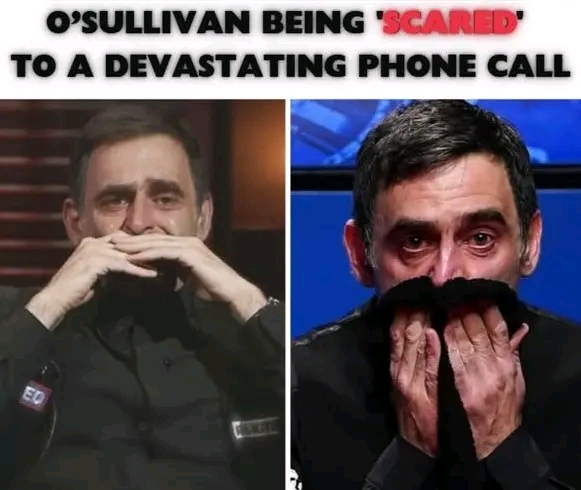
Raw Emotion in the Face of Ronnie O’Sullivan: Shocking News
In the world of professional sport, athletes often exist behind a veil of discipline, focus, and competitive fire. Their public image is shaped by victories, records, rivalries, and the moments of brilliance that mesmerize millions. Yet behind even the most remarkable champions lies a human being—one capable of vulnerability, uncertainty, and pain. Few moments capture this duality more clearly than those rare instances when an athlete’s emotional armor slips, revealing a glimpse into their private battles. Such was the case when Ronnie O’Sullivan, one of snooker’s greatest icons, was visibly shaken after receiving shocking news that left both fans and commentators stunned.
O’Sullivan has long been known not just for his exceptional snooker talent, but also for his complex personality and openness about the challenges he has faced away from the table. He is admired for his honesty, charisma, and his willingness to speak candidly about issues many athletes avoid—mental health pressures, personal struggles, and the emotional toll of life in the spotlight. That authenticity has endeared him to countless fans around the world. But on this occasion, the weight of the moment was unmistakable, and his reaction left a deep impression on anyone who saw it.
What makes this incident particularly powerful is the contrast between O’Sullivan’s reputation as a fierce competitor and the raw, unfiltered emotion displayed on his face. Known for his sharp intuition, lightning-fast decision-making, and ability to conjure brilliance even under the most intense pressure, he has built a career on maintaining composure. But no amount of sporting experience can shield a person from the impact of unexpected, devastating news. When he received the phone call that triggered such a reaction, the expression across his face told a story far more profound than anything happening on the snooker table.
In that moment, the professional athlete disappeared, replaced instead by a man confronted with something deeply personal. His eyes, normally focused with clinical precision, grew heavy and distant. His hands moved instinctively toward his face, a gesture that spoke volumes even without a single word being spoken. The silence in the room around him seemed to stretch endlessly as those present tried to make sense of his sudden emotional collapse. Cameras captured the scene, but even the cold lens of technology could not flatten the depth of the emotion being felt.
There is something universally relatable about unexpectedly receiving devastating news. Whether it concerns family, health, or personal crisis, it is a reminder that no level of fame, success, or brilliance can protect someone from the fragility of being human. O’Sullivan’s reaction resonated with many because it was sincere. It wasn’t staged, it wasn’t calculated, and it wasn’t a performance. It was a moment of truth.
While the exact details of the news remain private, the emotional weight it carried was clear. And in the aftermath, conversations across fan communities shifted from match results and rankings to empathy and concern. People saw not the snooker legend, but the human behind the legend. They were reminded that heroes, too, can hurt.
The reactions across social media reflected this collective sentiment. Fans expressed their support, sharing stories of their own moments of emotional collapse and how they managed to move forward. In a way, O’Sullivan’s vulnerability became a bridge—connecting people through shared experiences of grief, fear, and shock. It encouraged discussions about mental resilience, emotional expression, and the importance of acknowledging pain instead of burying it.
For many athletes, the pressure to appear strong at all times can become a burden. The expectation to “push through” or “stay focused” can make it difficult for them to show weakness openly. O’Sullivan’s moment, therefore, served as a powerful reminder that emotional honesty is not a sign of fragility—it is a sign of humanity. It also highlighted the ongoing importance of mental health awareness in sport. Public displays of emotion from high-profile athletes often spark broader conversations about the toll that constant pressure, scrutiny, and competition can take on a person. His emotional reaction helped to bring those issues to the forefront once again.
Yet beyond the broader discussions, there is also something deeply personal to acknowledge: the courage required simply to feel. In a world where the spotlight rarely dims, allowing oneself to express genuine emotion—especially painful emotion—is not easy. Whether intentional or not, O’Sullivan’s visible reaction became a moment of honesty that transcended sport.
As time passed, he returned to the table, displaying the resilience he has shown repeatedly throughout his career. But many observers noted that this moment marked a meaningful chapter—one that revealed not his weakness, but his depth. It reinforced the idea that true strength is not always measured by trophies, rankings, or victories. Sometimes, it is measured by the willingness to face hardship openly, to acknowledge overwhelming emotion, and to rise again.
The world often celebrates O’Sullivan for his record-breaking achievements, his electrifying style of play, and his unparalleled skill. But this moment reminded everyone that his legacy is not built solely on sporting brilliance. It is also built on authenticity. His humanity is part of what makes him compelling—not just as an athlete, but as a person whom people can relate to, admire, and empathize with.
In the end, the image of O’Sullivan wiping his eyes, burying his face in his hands, or trying to steady himself in the face of shocking news is not one of defeat. It is a portrait of a man navigating the same emotional landscape that everyone must face at some point in their lives. It is a reminder that behind every champion—behind every public figure—lies a human being with fears, hopes, and vulnerabilities.
“Raw Emotion in the Face of Ronnie O’Sullivan: Shocking News” captures not just a moment of sadness, but a moment of truth. And sometimes, truth—even painful truth—is what connects us most deeply.